Black Mold Removal in Baton Rouge, LA
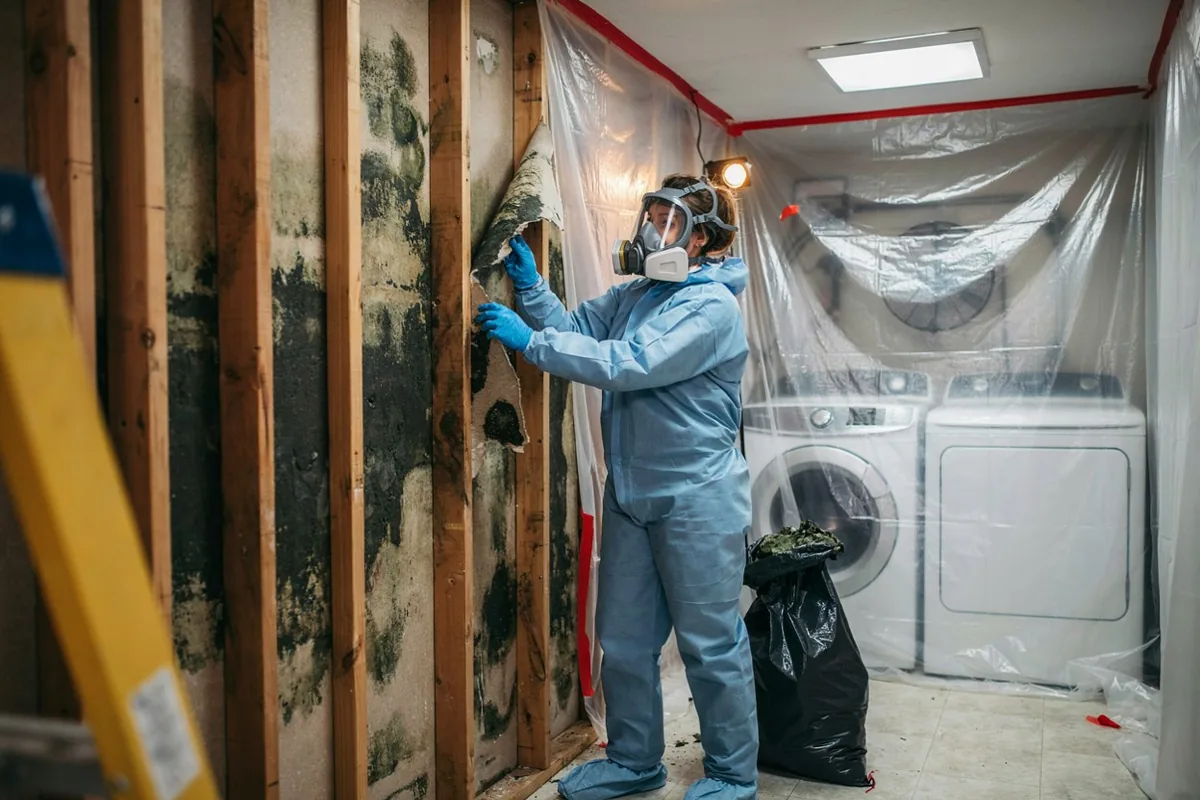
“Is this black mold?” is usually the first question people ask us about a dark patch. Here is the honest answer: the color doesn’t change what has to happen. CDC says it isn’t necessary to identify the type of mold, because all molds should be treated the same way and removed. We remove dark mold, and every other kind, in Baton Rouge and the Capital Region.
What “black mold” usually means
The species people mean, Stachybotrys, is greenish-black and grows on material with a lot of cellulose — drywall, ceiling tile, paper, fiberboard — that has stayed wet for a long time. Constant moisture is required. So a dark patch is often a sign of a leak that ran for a while, not a short one. Plenty of other common molds are dark too. None of that matters to the removal.
No scare tactics
- CDC has not found conclusive evidence linking airborne mold toxins to illness, and says the reported link between this mold and severe illness in infants has not been proven.
- What CDC does say: damp, moldy environments can cause stuffy nose, sore throat, coughing, wheezing, burning eyes, and skin rash.
- People with asthma or weakened immune systems are at more risk.
- That’s reason enough to remove it. It isn’t a reason to panic.
Tell Us Where You See It, 24/7
What the removal looks like
Same as any other mold: sealed work area under negative pressure, wet porous material out and bagged before it leaves the room, framing cleaned in place, HEPA vacuum and wipe-down, framing dried before anything is rebuilt. If the growth is on drywall, that drywall comes out. If it’s on a ceiling, the ceiling section comes out. We find where the water came from and tell you what has to change so it doesn’t come back.
Baton Rouge notes
Dark growth here most often follows a roof leak into a ceiling, a supply line inside a wall, or the 2016 flood. Houses that were dried fast and closed up in the fall of 2016 sometimes show a dark line along the bottom of the wall years later. If it never smelled right after the flood, that’s worth a call.