What happens on the job, and what it means for you
| What happens |
What it means for you |
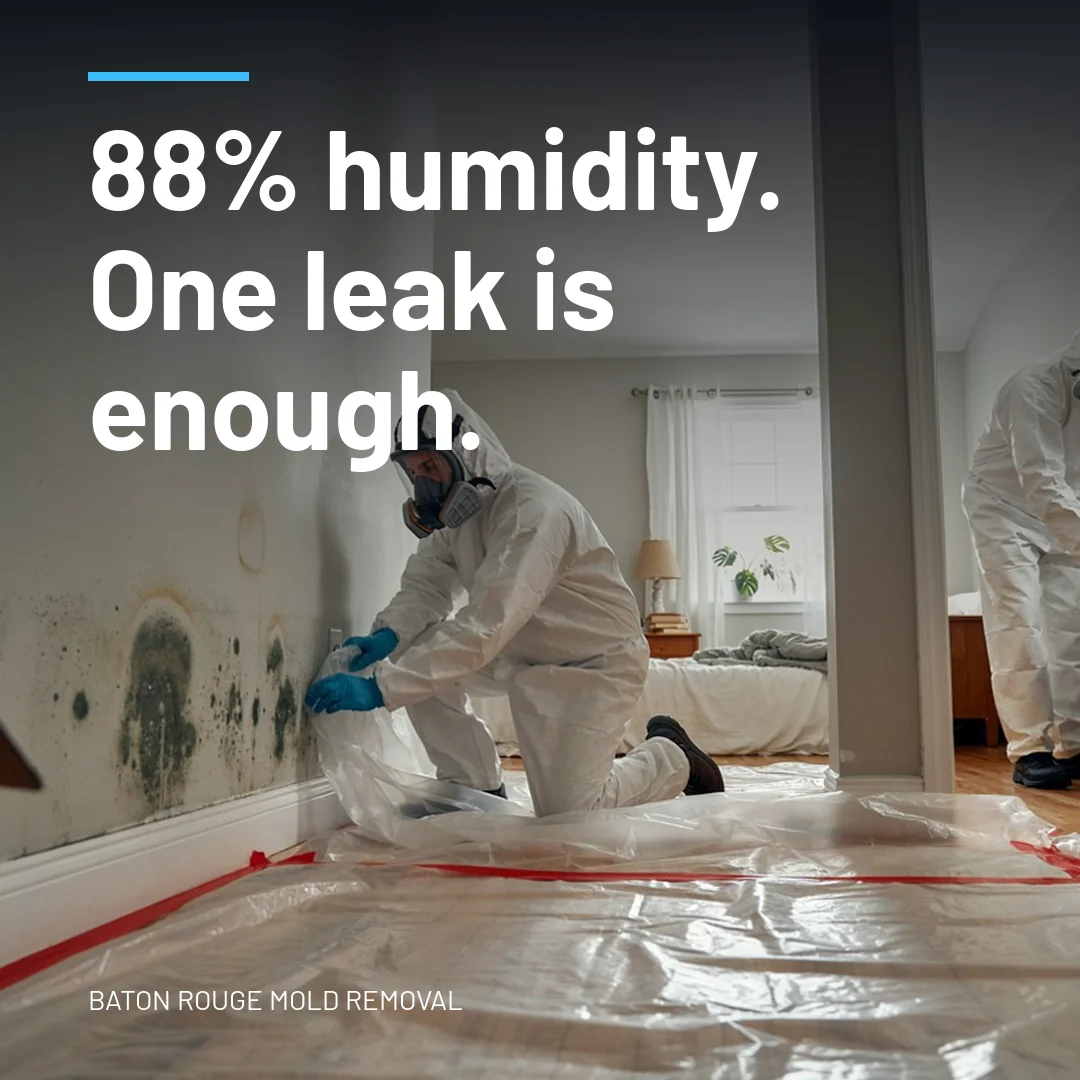
| We seal the work area in plastic and keep it under negative pressure |
Spores stay in the room we’re working in instead of moving through the rest of the house |
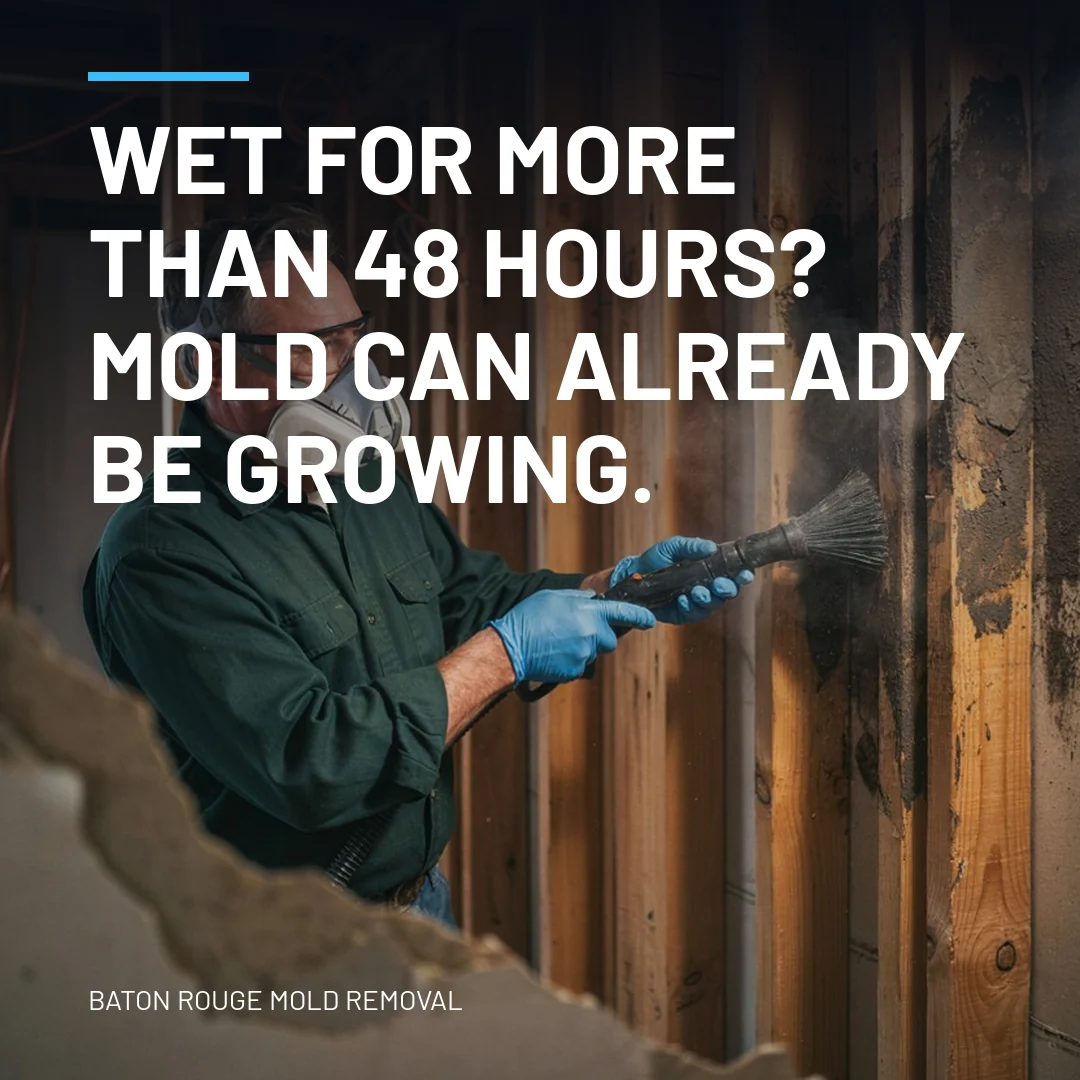
| Wet drywall, insulation, carpet pad, and trim come out; framing and masonry get cleaned in place |
You lose the material that can’t be saved and keep the structure that can |
| Removed material is bagged inside the sealed area before it leaves |
Moldy debris isn’t carried open through the hallway and the kitchen |
| Cleaned surfaces are HEPA-vacuumed and wiped down before anything is rebuilt |
Nobody is closing new drywall over the problem |
| We find where the water came from and tell you what has to change for the job to hold |
Removal without stopping the moisture is a repeat job, and neither of us wants that |
| You get a written report of what came out and why |
Louisiana law requires it, and it’s what a buyer, a tenant, or an adjuster will ask for |
Before You Paint Over It
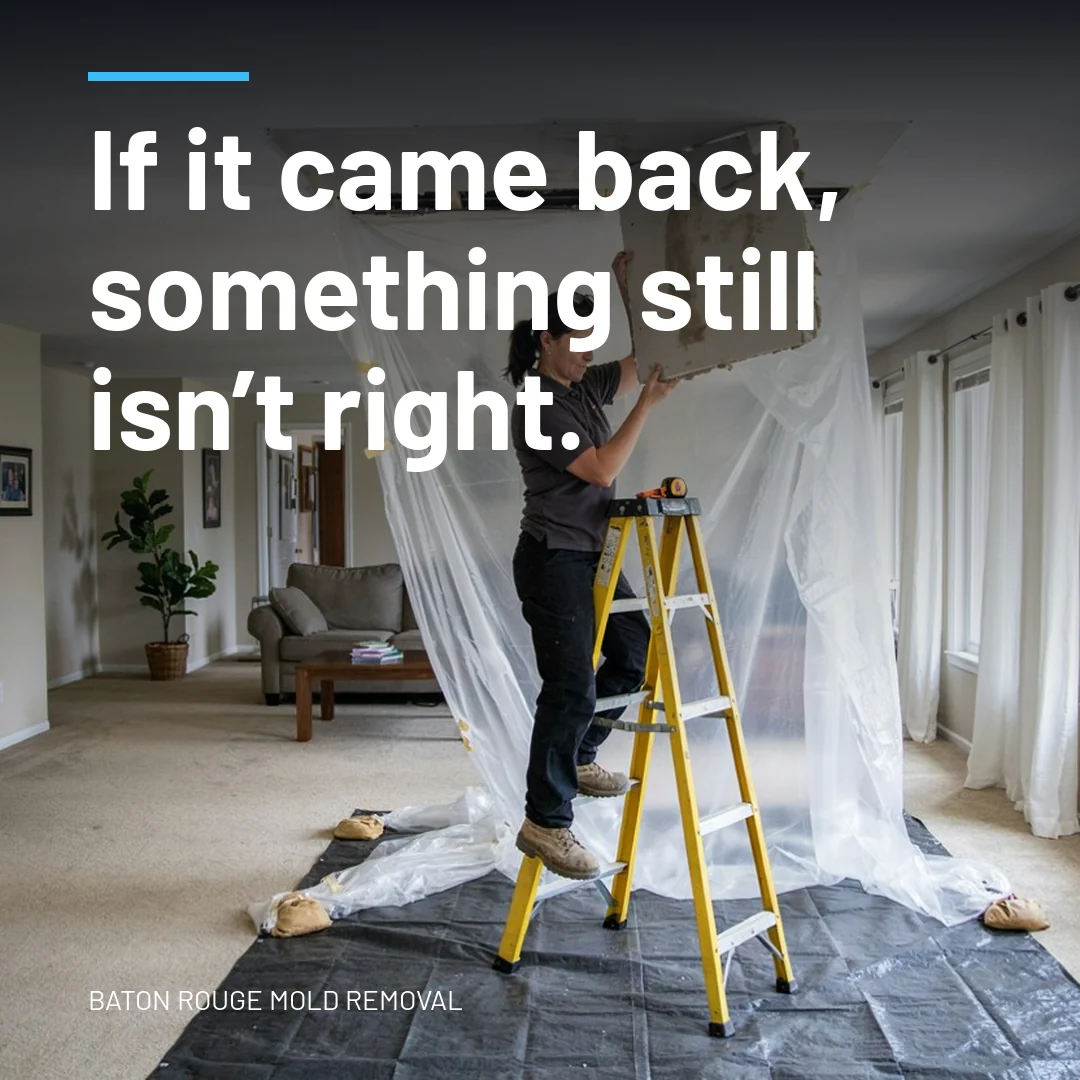
If it came back, something still isn’t right. A fresh coat of paint changes the color — not the cause. Scrubbing the surface can make a wall look fine for a month while the growth inside the drywall keeps going, because the moisture that fed it is still there.
EPA doesn’t recommend bleach as a routine mold treatment, and it says plainly not to paint or caulk over mold. Porous materials that have been wet and moldy — drywall, insulation, carpet pad, ceiling tile — usually have to come out. Dead mold is still an allergen, so killing it isn’t the goal. Removing it is.
What is different about mold in Baton Rouge
Three of the twelve most humid cities in the country are in Louisiana, and Baton Rouge is one of them. That’s the background condition. On top of it sits the housing: slab ranches from the 1960s and 70s in Broadmoor and Sherwood Forest with original bathroom plumbing, raised cottages in Mid City and the Garden District with pier foundations and damp crawl spaces, newer construction out toward Central and Zachary built tight enough that a small leak has nowhere to dry.
Then there’s August 2016. Seven trillion gallons of rain fell on the Capital Region in about three days, and only about 12 percent of East Baton Rouge homes had flood insurance. A lot of houses were dried “well enough” and closed back up fast because people had to get back in them. The flood is over. The mold may not be. If a room has never smelled right since, that’s worth a call.
The 2016 flood changed how Baton Rouge thinks about water. But storm damage isn’t the only moisture problem. One plumbing leak can cause mold.
When Mold Reaches The HVAC
Baton Rouge runs air conditioning ten or eleven months a year. Cold air moving through ducts in a hot attic makes condensation, and condensation in insulated duct is exactly what mold needs. If the house smells musty every time the system kicks on, or one vent always has a dark ring around it, the growth may be in the system rather than the room. EPA says not to run a system you suspect is contaminated, because it spreads spores through the house, and that wet or moldy insulated duct can’t be effectively cleaned — it gets replaced. HVAC and duct mold remediation covers what that looks like.
Dealing With A Rental?
Louisiana landlords are responsible for defects in the property whether or not they knew about them. Tenants can’t withhold rent for unmade repairs, which means the fastest path for both sides is usually to get the growth removed and documented. If you’re a landlord, the written report protects you. If you’re a tenant, say so when you call — it changes how we document the job.
Selling the house?
Louisiana’s required property disclosure form asks sellers directly about mold, mildew, water intrusion, and flooding. A known problem that isn’t disclosed can come back as a rescission claim or a damages claim after closing. A known problem that was removed, with a written report, is a line on the form and a piece of paper in the file. That’s the easier conversation to have with a buyer.
Call And Describe It.
We answer at any hour. Tell us where you see it or smell it, what got wet, and when the water problem started. If we’re available, you’ll be talking to the person who handles the work in about a minute. If we’re already on a job, you’ll get a callback window and the number we’ll call from, so you know it’s us.
We take calls from Baton Rouge, St. George, Central, Zachary, Baker, Port Allen, Addis, Brusly, and St. Francisville, plus the neighborhoods in between. The full list of nearby communities is on the areas page.
Found mold after a leak? Call.